Buy Less Stuff
Summary: Borrow or Buy Used
Description
Clothes, toys, sports equipment, furniture--all the stuff we use takes energy and resources to produce. If we throw them away when we're done, we double down on that environmental toll by sending them to the incinerator or landfill. Waste Management hauls the Boxborough trash from our transfer station to the Wheelabrator North Andover’s waste-to-energy facility where it is incinerated and converted into electricity. Boxborough recycling items are taken to Waste Management's Material Recycling Facility in Billerica where they are sorted and recycled.
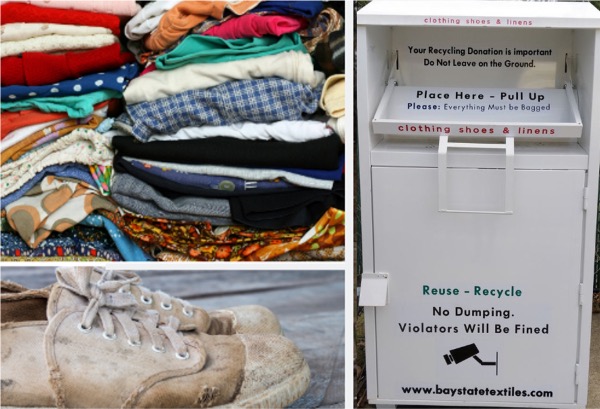
Instead of trashing your used items, put them back into circulation where somebody else can use them. And, before you buy a new replacement, see if there is a way to borrow or buy it secondhand. Buying used items is a critical step in creating a Circular Economy because it helps drive demand for recycled or secondhand products, fueling a virtuous circle that's better for the environment and for your wallet, too.
Need a pressure washer? Before opening your wallet and adding yet another object to your household, find out if you can borrow one from a neighbor. Growing out of an old pair of skates? Check out used items online and in secondhand stores. See "Steps to Take" for a list of vendors and websites.
Pass things on locally so that a neighbor can enjoy it.
While you're at it, try to avoid the "free" swag given out at conferences and events like bottled water, pens, condiment packets and plastic utensils. While those things don't cost you anything, they aren't really free in terms of their impact on the environment. Say “No, thank you” to things you don't need, and help stop the meaningless exploitation of the finite resources on our planet.
Deep Dive
Visit www.EnergizeBoxborough.org for more Zero Waste tips and initiatives.
Other Resources:
The Story of Stuff: Watch animated shorts and documentaries about our consumption-crazed culture and simple, viable, efficient solutions to a more just and sustainable future, including solutions that drive us away from plastic and promote real system change.
Books to Counter Consumerism By Gemma Alexander
Empire of Things
by Frank Trentmann
Trentmann’s 2016 history of stuff tracks takes a long view on material culture. He tracks the centuries-long rise in trade-based affluence through to the current challenges of waste and inequality. But Empire of Things is not preachy or judgmental. If you want to understand acquisitiveness better without feeling too bad about it, this is a good book to start with.
Affluenza: How Overconsumption is Killing Us – and How to Fight Back
by John de Graaf, David Wann, and Thomas Naylor
First published in 2001, Affluenza is a classic of anticonsumerist literature that introduced the idea of consumerism as a problem rather than a virtue to many people. A new edition updates the original with information on the Great Recession and new policy recommendations while maintaining the core message that the best things in life aren’t things.
A Consumers’ Republic: The Politics of Mass Consumption in Postwar America
by Lizabeth Cohen
If you’ve ever wondered how citizens transformed into consumers, A Consumer’s Republic is the book for you. Bancroft Prize winner and Pulitzer Prize finalist Lizabeth Cohen shows how the pursuit of prosperity after World War II fueled America’s pervasive consumer mentality and reworked American life.
Less is More: Embracing Simplicity for a Healthy Planet, a Caring Economy and Lasting Happiness
by Cecile Andrews and Wanda Urbanska
For some people, “anticonsumer” might feel a little too political. But there is an aesthetic wing to the movement known as “simplicity.” The essay collection Less is More includes Jim Merkel, Bill McKibben, Duane Elgin, Juliet Schor, John de Graaf, and others. They remind readers that community counts more than possessions, and recommend policies to make simplicity and sustainability available to everyone.
The Conscious Closet
by Elizabeth Cline
In 2012, Elizabeth Cline sounded the alarm in Overdressed about the human and environmental harm caused by the fast fashion industry. Now she’s back with The Conscious Closet teaching readers how to get off the fast-fashion treadmill.
The Life-Changing Magic of Tidying Up: The Japanese Art of Decluttering and Organizing
by Marie Kondo
By now everyone has an opinion about Marie Kondo. Not everyone wants to thank their discarded knickknacks. But Kondo’s primary message is that people are happier when they don’t mindlessly stockpile stuff. If you are having a hard time letting go of stuff and you want to keep from refilling your space once you’ve decluttered, The Life-Changing Magic of Tidying Up can help.
Steps to Take
Below are local resources where you can share (pass on or take) and trade (re-sell or buy) used items.
Free items:
www.nextdoor.com Free section
Everything Free Lexington MA Facebook Group
Buy Nothing Arlington/Lexington, MA Facebook Group
Purchase/Sell:
Local Facebook ‘Yard Sale’/Buy and Sell groups
Yard Sale/Garage Sale
Plato’s Closet (you can bring your used clothing there too)
EcoBuilding Bargains by Center for EcoTechnology (CET)
The Reuse Center at Boston Building Resources
If you know of other secondhand outlets, please click here to tell us about these outlets. We would be happy to share them here!
Energize Boxborough receives no payment from service providers.